Recovery Tools Built Into Your Training Schedule
Recovery Room in Sewell for athletes and lifters managing training stress through cold exposure and infrared therapy
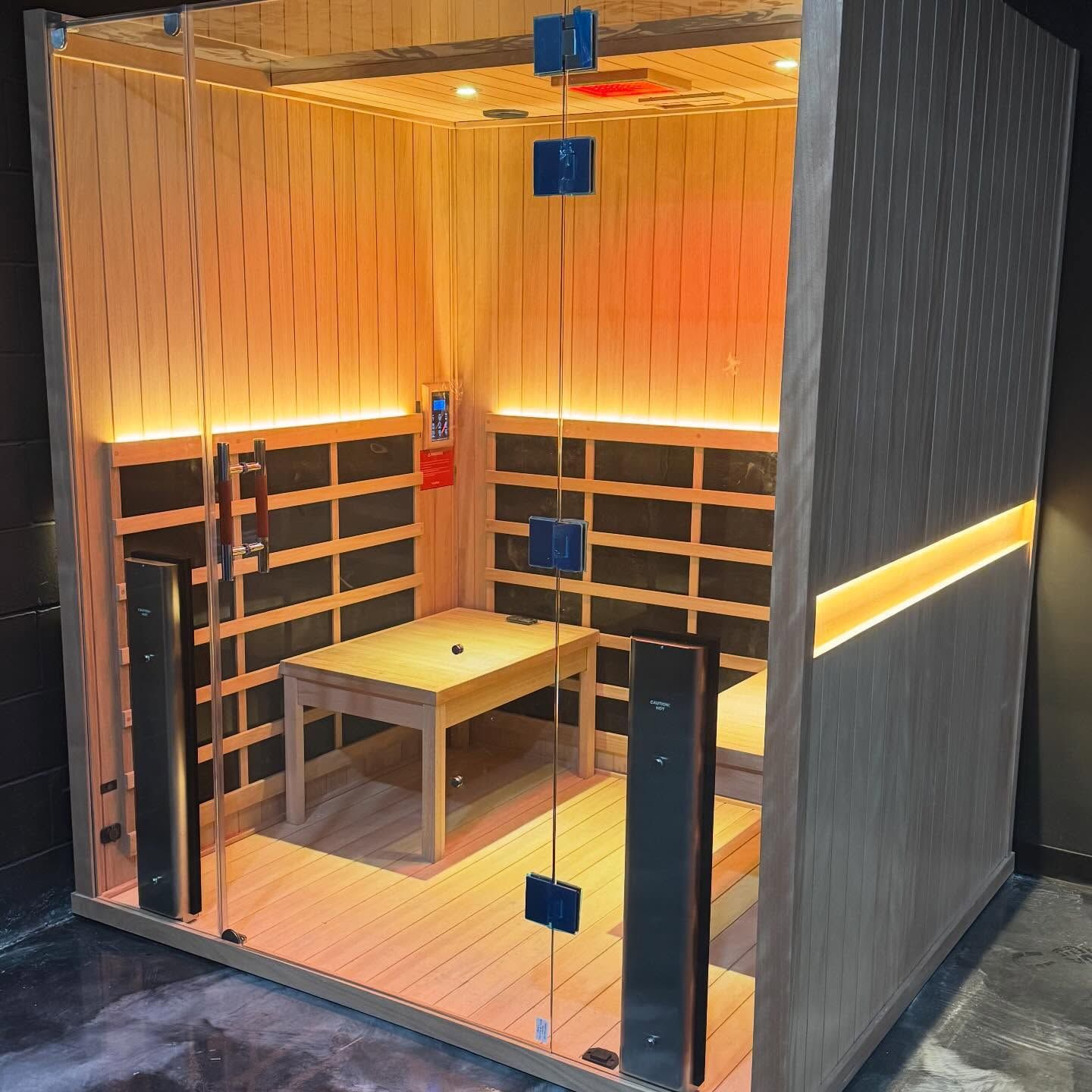
Hard training produces fatigue and muscle damage that must be addressed systematically for adaptation to occur. The recovery room at Wolf Fitness in Sewell contains cold plunge tubs and red light therapy saunas in each locker room, giving you immediate access to contrast therapy and infrared exposure after every session. Cold plunges drop water temperature low enough to trigger vasoconstriction and reduce localized inflammation, while red light therapy saunas use near-infrared wavelengths that penetrate tissue and support cellular recovery processes without the extreme heat of traditional saunas.
Cold plunges involve full-body immersion in chilled water for timed intervals, typically after high-intensity or high-volume training sessions, to limit excessive inflammation and speed the removal of metabolic waste from worked muscles. Red light therapy uses specific wavelengths in the 600 to 850 nanometer range, which studies show can support mitochondrial function and reduce delayed-onset muscle soreness when used consistently post-training.
Access the recovery room after your next training session to incorporate cold exposure or infrared therapy into your routine.
How Cold and Infrared Exposure Support Training Adaptation
Cold water immersion after training constricts blood vessels and limits the inflammatory response that, when excessive, prolongs soreness and delays the next quality session. Once you exit the plunge, blood vessels dilate and fresh blood flows into the tissue, carrying nutrients and clearing waste products faster than passive recovery alone. Red light therapy operates through a different mechanism, where near-infrared light penetrates skin and stimulates mitochondria to produce ATP more efficiently, supporting the energy demands of tissue repair without elevating core temperature.
You'll notice reduced soreness intensity 24 to 48 hours after hard sessions, shorter recovery windows between training days, and less cumulative fatigue across training weeks when you use these modalities consistently. The difference becomes most apparent during high-volume phases or competition prep when training frequency increases and recovery time shrinks.
Both tools are included in your membership, so you're not choosing between paying for recovery services or skipping them to save money. Regular use becomes part of your training rhythm rather than an occasional add-on when soreness becomes unmanageable.
Answers to Frequent Recovery Questions
Members training in Pitman often ask how to use cold plunges and red light therapy correctly and whether these tools actually change recovery outcomes or just feel good in the moment.
What does a cold plunge session involve?
You immerse fully in chilled water for three to ten minutes immediately after training, keeping your core submerged while controlling your breathing to manage the cold shock response, then exit and allow your body to rewarm naturally without external heat sources.
How does red light therapy differ from sitting in a traditional sauna?
Red light saunas use near-infrared wavelengths that penetrate tissue without extreme ambient heat, so you're not forcing cardiovascular stress through high temperatures, and the targeted light exposure supports cellular energy production directly rather than relying solely on heat-induced vasodilation.
When should you use cold plunges versus red light therapy?
Cold exposure works best immediately after high-intensity or high-volume sessions to manage acute inflammation, while red light therapy can be used post-training or on rest days to support ongoing tissue repair and mitochondrial function without the stress response cold immersion triggers.
Why include recovery modalities instead of just resting between sessions?
Active recovery tools like cold exposure and infrared therapy reduce excessive inflammation and support cellular repair processes faster than rest alone, which shortens the time until you can train hard again without accumulating unmanageable fatigue or injury risk.
How quickly do these modalities affect soreness and readiness?
Most people notice reduced soreness within 24 hours when using cold plunges consistently after hard sessions, and cumulative benefits from red light therapy become apparent over two to three weeks as recovery between sessions improves and training quality stays higher across the week.
Wolf Fitness includes cold plunge tubs and red light therapy saunas in
every membership, so recovery tools are available every training day. Use the recovery room after your next session to see how cold and infrared exposure fit into your training schedule.